All Biochemistry and Molecular Biology majors are encouraged to become affiliated with a Biochemistry and Molecular Biology laboratory early in their undergraduate career through Undergraduate Biochemistry Research (BMB:3993) and Honors Research Practicum (HONR:3994).
These courses lead to an independent course, Advanced Undergraduate Biochemistry Research (BMB:4999), which pairs individual students with faculty advisors, providing the opportunity to conduct research in a specific area of interest. Undergraduate research allows Biochemistry and Molecular Biology majors to integrate the knowledge they have gained and to take part in the forefront of research.
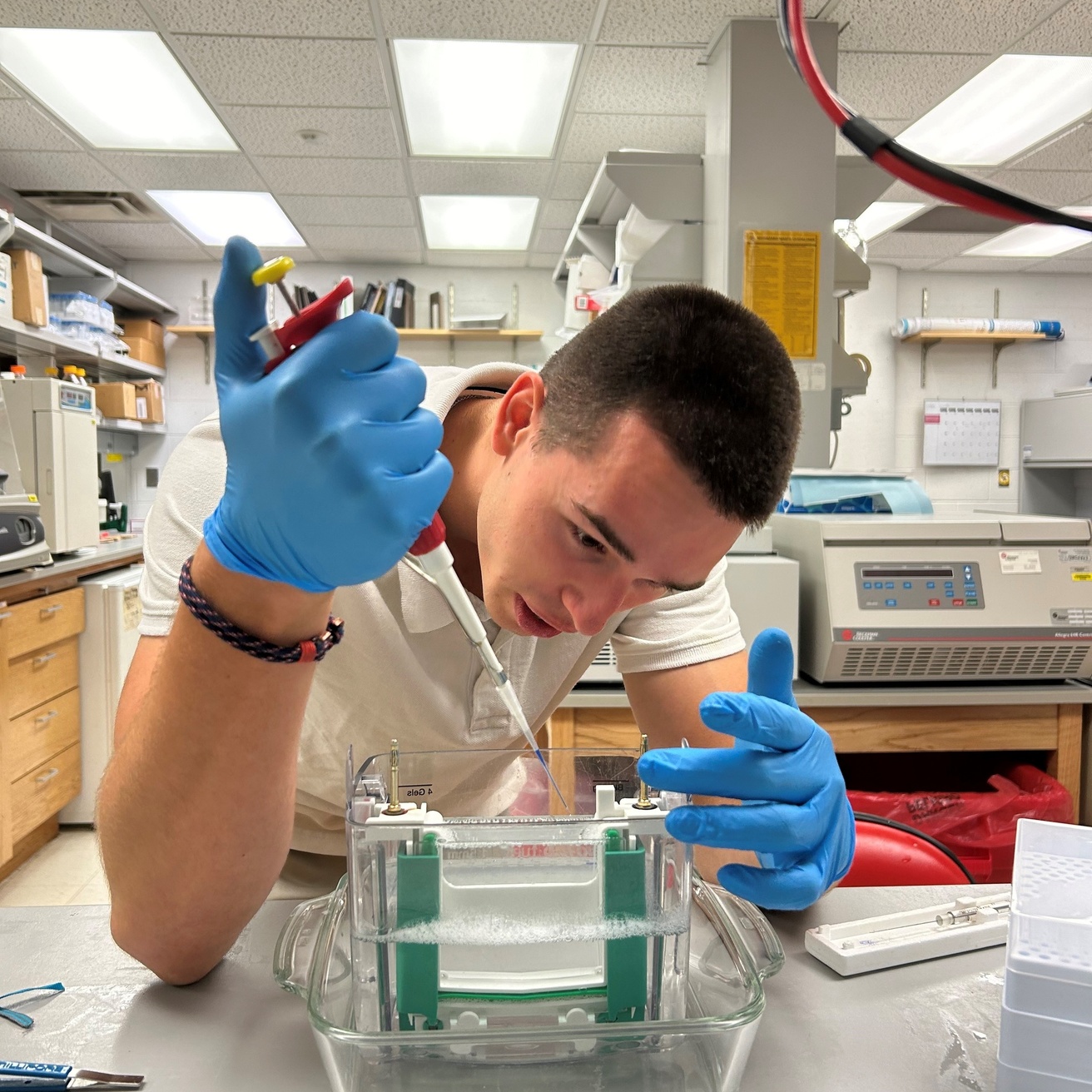
Advantages of Undergraduate Research
- Experience the excitement of scientific investigation
- Prepare you for graduate, medical, dental, pharmacy or other professional schools
- Opportunities to present your research at conferences
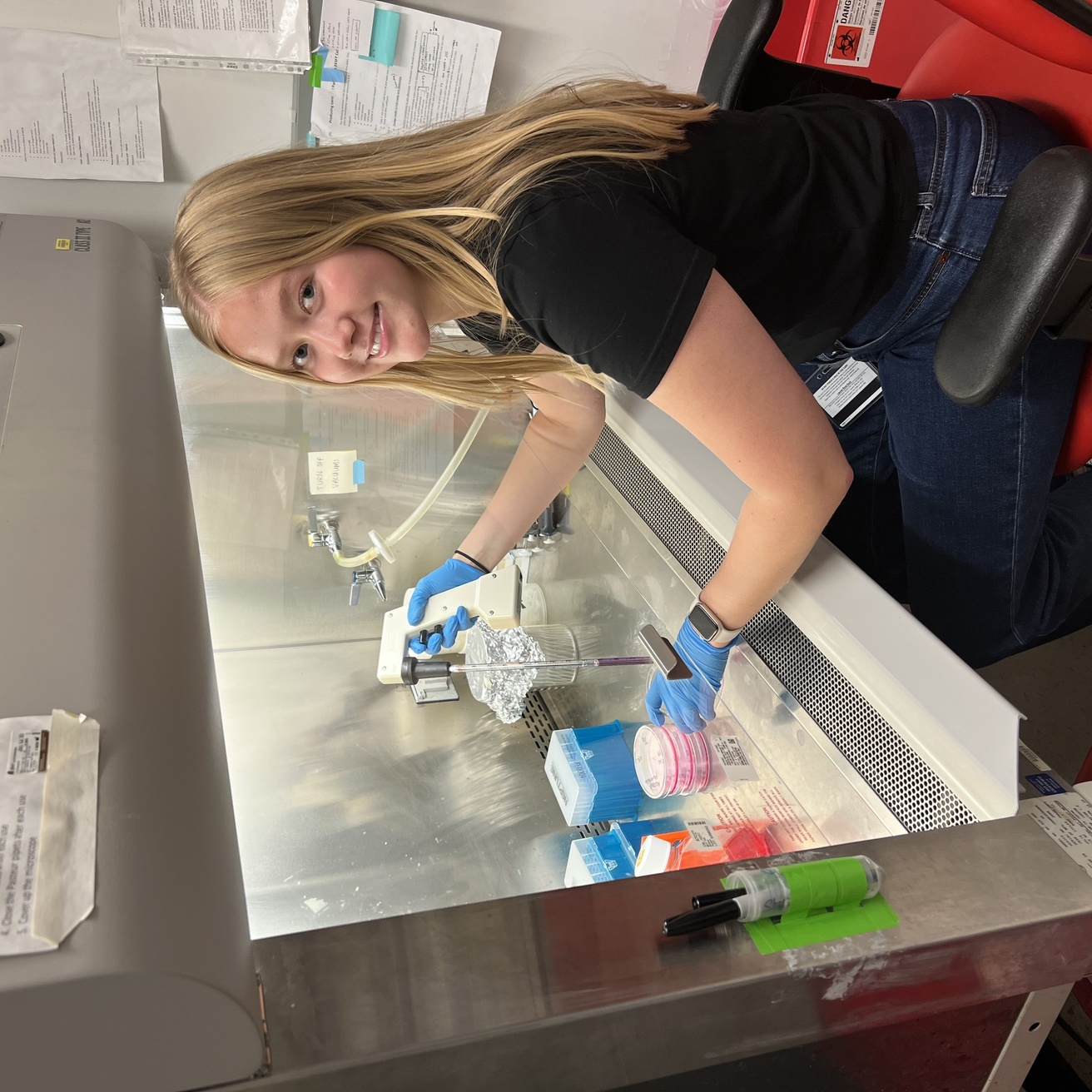
Getting Started: Finding a Research Position
Research opportunities are year-round and are best arranged a semester in advance. There are three routes for finding a research lab:
- View faculty research in the Department of Biochemistry and Molecular Biology by visiting faculty profiles and lab websites. Identify a few faculty with research programs that interest you and contact them via e-mail regarding your interest.
- Submit an online application for undergraduate research.
- For hourly paid positions in a research laboratory, visit the University of Iowa Handshake website.
Faculty Accepting Undergraduate Research Students 2026-2027
- Ernesto Fuentes, PhD, Professor of Biochemistry and Molecular Biology (ernesto-fuentes@uiowa.edu)
- Ksenia Krupina, PhD, Assistant Professor of Biochemistry and Molecular Biology (kseniia-krupina@uiowa.edu)
- Yue Lu, PhD, Assistant Professor of Biochemistry and Molecular Biology (yue-lu@uiowa.edu)
- Michael Schnieders, DSc, Professor of Biochemistry and Molecular Biology (michael-schnieders@uiowa.edu)
- Maria Spies, PhD, Professor of Biochemistry and Molecular Biology (maria-spies@uiowa.edu)
- M. Todd Washington, PhD, Professor of Biochemistry and Molecular Biology (todd-washington@uiowa.edu)
Once you have been accepted into a laboratory, you and your mentor are required to submit a student-mentor agreement form. The student and mentor should review and complete the entire form together, including all information related to the research project, before the student clicks ‘Submit to Workflow.’ That form is linked above.
Academic Research for Credit: Introductory Level Courses
BMB:3993 - Undergraduate Biochemistry Research
This course may be arranged as a tutorial, or as a commitment to experimental work, depending on the desires of the student and the faculty member that they agree to work with. This course may be taken in any year, and has no prerequisites. Consent of the instructor is required, however. In this course, students will gain experience in an active biochemistry and molecular biology research lab, learning and performing experiments or researching a topic relevant to the current projects in that lab.
URES:3993 - Undergraduate Research Experiences
This course is similar to BMB:3993 but is graded as Pass/Fail. There are no prerequisites, variable credit hours, and is open to all majors.
URES:3994 - Undergraduate Research/Creative Projects
Independent research or pursuit of a creative project under mentorship of a faculty supervisor.
HONR:3994 - Honors Research Practicum
Honors Students are eligible to do research under the Honors Research Practicum course number before they have satisfied the prerequisites for BMB:4999. For more information, please visit the Honors Program website.
Paid Fellowships (URES:3995)
The Office of Undergraduate Research (OUR) offers financial support for University of Iowa undergraduates to conduct research with faculty members. Funding is available for the academic year and summer term through ICRU Fellowships with registration in URES:3995.
Academic Research for Credit: Senior Level Course
BMB:4999 - Advanced Undergraduate Biochemistry Research
In this course, students pursue independent study and research in areas of interest to them. It is extremely important for students to discuss expectations with their instructor before embarking on a project.
Prerequisites include: BMB:3120, BMB:3130, BMB:3140, and BMB:3150 with grades of B- or better and have previous experience in a research course (such as BMB:3993) or lab practicum (such as a HONR:3994, URES:3994, or a summer internship).
Six semester hours of BMB:4999 are required for all B.S. degree candidates and Honors students.
CLAS Independent Study/Research Hours Policy
The Department of Biochemistry and Molecular Biology strongly advises students interested in research to start research early during their undergraduate experience. We know that many students get involved in research during their first or second year. This is a great way to get an outstanding research experience.
However, we want to make sure that students realize that the CLAS does not allow more than 9 s.h. of independent study/research courses to count toward the minimum 120 s.h. needed for graduation.
This has not been an issue for Biochemistry and Molecular Biology majors because students who take more than 9 s.h. of BMB:3993 and BMB:4999 usually graduate with more than 120 s.h. However, the Department wants to make sure Biochemistry and Molecular Biology majors doing research know about this policy.
Important Deadlines
- Juniors planning to take Advanced Undergraduate Biochemistry Research - BMB:4999: This course can be taken by both BS and BA majors to meet the research requirement or to qualify for honors.
- Students usually start 4999 either in the summer after their junior year or in the fall of their senior year. Students interested in BMB:4999 should speak to their research mentor during the spring semester.
- Remember that Development of Senior Research Project (BMB:3150) is a prerequisite for BMB:4999. If you are a junior BA or BS major and are planning to take BMB:4999, you need to take Development of Senior Research Project in the previous spring term.
- Exceptions: In some cases, students who do not meet the grade prerequisites may be allowed to take BMB:4999 with the permission of a faculty sponsor and the approval of the Honors Advisor. Any student concerned about this is advised to discuss it in advance with the Honors Advisor.
Honors Thesis and Symposium
All students who wish to graduate with Honors in Biochemistry and Molecular Biology will write an Honors Thesis and present a seminar on their work at the spring Lata Undergraduate Research Symposium, usually at the end of April. A symposium is also organized in the Fall semester for those graduating in December.